

Deciding between in-house QA and outsourcing? This guide helps startup...
Categories
Tags
- build GCC India
- GCC approval India
- GCC compliance India
- GCC legal process India
- GCC license 2025
- GCC license cost India
- GCC license in India
- GCC operations India
- GCC registration India
- GCC regulations India
- GCC setup India
- GCC shared services India
- Global Capability Center license India
- how companies get GCC license India
- how to get GCC license in India
- India GCC business license
- iValuePlus GCC services
- iValuePlus GCC solutions
- offshore GCC India

How to Get a GCC License in India: Step-by-Step Guide for 2025–26
In the last decade, India has emerged as the global hub for Global Capability Centers (GCCs). From Fortune 500 companies to fast-scaling startups, organizations across the world are setting up GCCs in India to drive innovation, cost efficiency, and access to world-class talent.
But before you can establish and operate a GCC, one key legal step stands out: getting a GCC License in India. Without the right license, businesses risk compliance issues, delays, and operational bottlenecks.
This guide will walk you through how to get a GCC License in India in 2025–26, the step-by-step process, compliance requirements, costs, benefits, and common challenges. More importantly, it will show you how iValuePlus acts as a trusted partner for enterprises navigating this complex journey.
What is a GCC License in India?
A GCC License in India is the legal approval that allows multinational corporations to set up a Global Capability Center in the country. It covers permissions for:
- Business incorporation and registration under Indian law.
- Regulatory compliance with government and RBI norms.
- Employment, taxation, and payroll compliance.
- Operational licenses depending on the nature of the GCC (IT, R&D, shared services, etc.).
Simply put, a GCC license in India ensures that your offshore center can function legally, securely, and without compliance risks.
Why Do Companies Need a GCC License in India?
- Regulatory Compliance – Indian laws require proper registration and licensing for all foreign businesses.
- Banking & Finance Operations – To open bank accounts, manage payroll, and repatriate profits.
- Talent Hiring – To legally hire Indian employees and contractors.
- Operational Transparency – To maintain trust with stakeholders and avoid legal disputes.
- Scaling Global Operations – A license makes the GCC eligible for government benefits, tax incentives, and expansion.
Step-by-Step Guide: How to Get a GCC License in India
Here’s the 2025–26 step-by-step process to obtain your GCC license in India:
Step 1: Define Your GCC Model
- Shared Services GCC – Handles finance, HR, payroll, and compliance.
- IT & Digital GCC – Focuses on software development, cloud, AI, cybersecurity.
- R&D GCC – For innovation, product engineering, and patents.
- Knowledge GCC – Analytics, consulting, and market intelligence.
Choosing the right model is crucial before applying for a GCC license in India.
Step 2: Incorporate a Legal Entity in India
- Register your business as a Private Limited Company or LLP under the Companies Act, 2013.
- Obtain a Director Identification Number (DIN) and Digital Signature Certificate (DSC) for key representatives.
- File incorporation documents with the Ministry of Corporate Affairs (MCA).
iValuePlus provides end-to-end assistance in company incorporation for GCCs.
Step 3: Apply for Necessary Business Licenses
Depending on your GCC operations, you will need:
- Shops & Establishment License (for office premises).
- Professional Tax Registration.
- Goods & Services Tax (GST) Registration.
- Import Export Code (IEC) (if handling global supply chains).
- Sector-specific approvals (for IT, R&D, or financial GCCs).
Step 4: RBI and FEMA Compliance
Foreign-owned GCCs in India must comply with RBI (Reserve Bank of India) and FEMA (Foreign Exchange Management Act):
- File Foreign Direct Investment (FDI) approval documents.
- Report shareholding patterns.
- Ensure capital inflows are recorded with RBI.
Non-compliance can delay or reject your GCC license in India.
Step 5: Taxation and Payroll Setup
- Register with the Income Tax Department.
- Apply for PAN & TAN.
- Set up payroll in compliance with Provident Fund (PF), Employee State Insurance (ESI), and gratuity laws.
iValuePlus helps GCCs with end-to-end payroll outsourcing and compliance services.
Step 6: Office Infrastructure and IT Setup
To operationalize your GCC license in India:
- Lease/rent office space.
- Establish IT infrastructure and secure networks.
- Ensure data protection compliance (especially for financial/GDPR-sensitive industries).
Step 7: Final Approval and Operations Kick-off
Once all registrations and compliance requirements are met, your GCC License in India is granted, and you can start operations.
Benefits of Getting a GCC License in India
- Legal recognition for seamless business operations.
- Talent access from India’s vast IT and digital workforce.
- Tax benefits under India’s pro-business policies.
- Global credibility with stakeholders and partners.
- Future scalability – Transition into a fully functional innovation-driven GCC.
Common Challenges in Getting a GCC License in India
- Complex multi-step legal compliance.
- Regulatory delays in approvals.
- Banking & taxation hurdles.
- Sector-specific license requirements.
- Lack of local expertise.
This is where iValuePlus becomes your trusted partner.
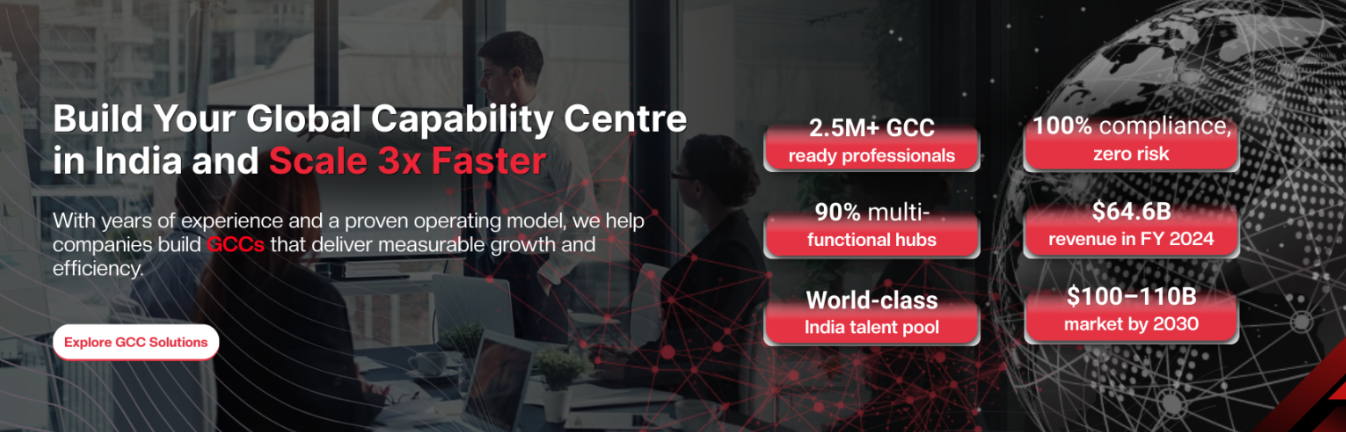
Why Choose iValuePlus for Your GCC License in India?
iValuePlus simplifies the entire journey of setting up a GCC in India. From company incorporation to compliance, payroll, IT setup, and scaling operations, IVP ensures zero delays and full compliance.
Key Services by iValuePlus:
- Legal registration and licensing.
- Payroll and accounting compliance.
- Offshore Development Centers (ODCs).
- Build-Operate-Transfer (BOT) model for risk-free scaling.
- IT infrastructure and office setup.
- Staff augmentation for global enterprises.
With iValuePlus, you not only secure your GCC license in India but also gain a long-term partner for scaling into a world-class capability center.
FAQ
Q1. What is a GCC license in India?
A GCC license in India is the legal approval required for multinational companies to establish and operate a Global Capability Center in the country.
Q2. How long does it take to get a GCC license in India?
Typically, it takes 8–12 weeks, depending on the type of GCC, compliance requirements, and regulatory approvals.
Q3. Can startups also apply for a GCC license in India?
Yes. While traditionally used by large enterprises, startups can also apply for a GCC license in India to scale globally.
Q4. What happens if a company operates without a GCC license in India?
Operating without a GCC license may lead to legal penalties, taxation issues, and compliance risks.
Q5. Why partner with iValuePlus for GCC licensing in India?
iValuePlus ensures end-to-end compliance, faster approvals, and risk-free setup of GCCs in India, making it the preferred partner for global businesses.
Conclusion
The GCC License in India is not just a legal formalityit’s the foundation for building a future-ready Global Capability Center. With India emerging as the top destination for GCCs in 2025–26, getting the license right is critical to success.
By partnering with iValuePlus, enterprises ensure compliance, scalability, and risk-free expansion while focusing on what matters most—innovation and growth.
Ready to set up your GCC in India? Get in tocuh today!
Recent Post
How to Scale Infrastructure Without a DevOps Team
How to Scale Infrastructure Without a DevOps Team The Infrastructure...
India Operations Setup Checklist for Foreign Companies: Office, IT, HR and Compliance
A practical India operations setup checklist for global companies covering...

iValuePlus Services
iValuePlus is a one-stop solution to address all your needs to access, build and grow your business in the Indian market which is cost-effective & has a huge talent pool. Established in 2019 as a ‘Business Solution provider', our team has delivered successful growth projects in the international market.
Our services include setting up ODC (offshore development center), Staff Augmentation, Talent Acquisition, Digital Marketing, in the IT/ITES domain.